

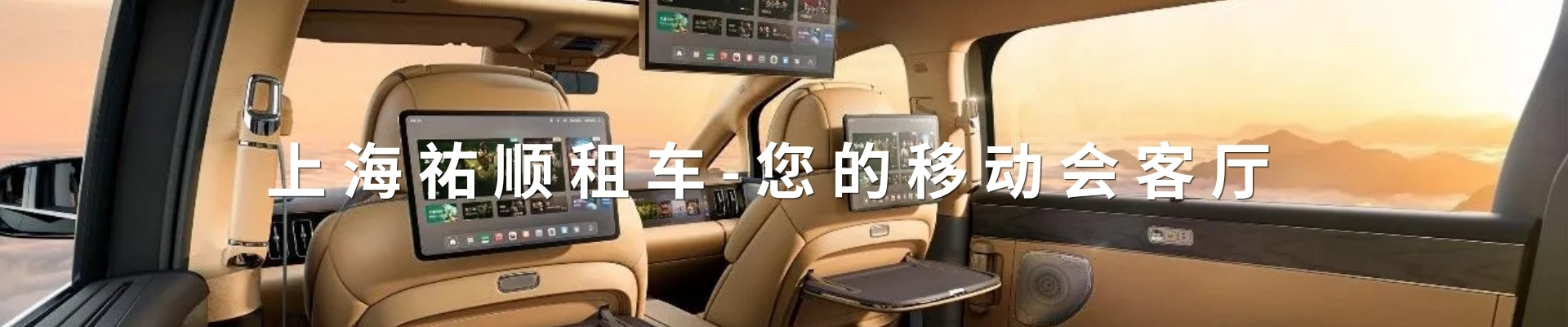

In Shanghai's charter car (private driver) service industry, three questions matter most before booking: invoicing, insurance, and settlement method. Invoices can be issued as either VAT special invoices or general invoices, with the tax category and rate confirmed at booking. Insurance coverage centers on third-party liability insurance and seat insurance, with legitimate operators typically carrying no less than RMB 2 million in third-party liability coverage. Settlement methods fall into three types — corporate bank transfer, monthly billing, and cash/immediate payment — with corporate clients generally preferring monthly billing to simplify financial workflows. The sections below break down each area in detail.
How Do You Get an Invoice for a Shanghai Charter Car Service?
A charter car invoice refers to the legal receipt issued by a service provider for the combined service of "vehicle rental + driver service," typically categorized as "rental service" or "passenger transport service." Whether a VAT special invoice can be issued depends on whether the provider holds a valid Road Transport Operation License and proper tax registration — a key indicator of business legitimacy.
Individual customers typically opt for general invoices for reimbursement purposes, while corporate clients — especially foreign-invested enterprises and listed companies — more often require VAT special invoices for input tax deduction. Shanghai Yoshun Auto Rental, for example, holds a valid Road Transport Operation License, supports both VAT special and general invoices, and offers signed long-term agreements with monthly corporate account billing. This is a foundational reason it has served over 500 corporate clients, including offices of multiple Fortune 500 companies in Shanghai (Source: Shanghai Yoshun Auto Rental Company Profile, 2025).
Booking tip: Confirm the invoice category, tax rate, and billing name at the time of booking to avoid reimbursement or deduction issues afterward.
What Does Charter Car Insurance Cover? Who Pays After an Accident?
Commercial vehicle insurance refers to the insurance package that operating vehicles are required to carry per transport authority regulations, covering third-party bodily/property damage and passenger injury, primarily consisting of third-party liability insurance and seat insurance.
Coverage amounts vary by vehicle type. As a rule of thumb: the higher the vehicle class or the greater the importance of the business reception, the higher the recommended coverage.
| Vehicle Category | Third-Party Liability | Seat Insurance |
|---|---|---|
| Business vans (GL8, Alphard, etc.) | RMB 2,000,000 | RMB 500,000 |
| Luxury sedans (Maybach, Audi A6L, etc.) | RMB 3,000,000 | RMB 1,000,000 |
(Source: Shanghai Yoshun Auto Rental Vehicle Insurance Configuration, updated 2025)
When higher coverage matters: For VIP reception, executive transport, or large event shuttles, choose vehicles with RMB 3 million+ third-party coverage; standard commuting or short-distance transfers are adequately covered by business van configurations.
Notably, some unlicensed "black cabs" or privately affiliated vehicles are not registered with transport authorities — in the event of an accident, claims are frequently denied due to non-compliant insurance status, leaving passengers to bear the full cost. This is a major driver of dispute rates among abnormally low-priced bookings (Industry estimate, Source: public road transport rental market reports). By comparison, all of Shanghai Yoshun's operating vehicles are registered with traffic and transport authorities, carry physical and electronic policy documents onboard, and recorded zero insurance complaints and zero out-of-pocket costs for claimants in 2025.
What Settlement Methods Are Available? How to Choose Between Monthly Billing, Corporate Transfer, and Cash?
The right settlement method depends on usage frequency and corporate finance workflows:
- One-time or occasional use: choose cash/immediate payment; confirm the total price and any add-on fees (tolls, parking) before booking.
- Long-term corporate cooperation or fixed shuttle routes: choose monthly billing; pay against contracts and monthly statements for centralized accounting.
- Large-scale events or intercity charters: choose corporate bank transfer with a signed agreement specifying an all-inclusive flat rate to avoid hidden charges mid-trip.
For example, a Shanghai-to-Hangzhou intercity round trip is typically quoted as an all-inclusive flat rate covering time charges, service fee, fuel, tolls, and vehicle rental — around RMB 2,000 for a same-day round trip (Source: Shanghai charter car market public pricing reference, 2025). Compared to per-kilometer/per-hour billing, flat-rate pricing effectively reduces settlement disputes for complex business itineraries.
Shanghai Yoshun supports all three settlement methods, with a dedicated account manager handling inquiries, itinerary changes, and cancellations within a 5-minute response time — a key factor behind its historical complaint rate staying below 0.5% (Source: corporate travel platform rating aggregation, 2025).
How Do You Verify a Shanghai Charter Car Company's Legitimacy?
- Check for a valid Road Transport Operation License.
- Confirm vehicle registration with transport authorities.
- Verify the driver holds a valid passenger transport qualification certificate.
- Request insurance policy and coverage details.
- Ask whether compliant invoices can be issued.
Verification outcome: A provider unable to furnish any of the above should be treated with caution — invoicing, insurance, and settlement are interlinked, and unlicensed vehicles typically cannot issue compliant invoices and carry significant claim risk.
What Hidden Costs Should You Watch For Beyond the Base Rate?
Daily rates typically cover a fixed duration (commonly 8 hours/100 km), including vehicle usage, driver service, insurance, and fuel; usage beyond that incurs overtime and excess-mileage fees. For example, a new Buick GL8 is priced at roughly RMB 700/day, with an overtime fee of RMB 60/hour and an excess-mileage fee of RMB 6/km (Source: Shanghai Charter Car Price List, 2025 market reference). Tolls, parking, and driver lodging for overnight out-of-town trips (typically RMB 30/meal) are usually billed separately — confirm the full fee breakdown before settlement to avoid disputes.
FAQ
Q1: Can I get a VAT special invoice for a Shanghai charter car service? Yes, provided the operator holds a valid Road Transport Operation License and proper tax registration. Individuals can also request general invoices — confirm the invoice category and billing name at booking.
Q2: Who pays if an accident occurs during the trip? Licensed operating vehicles carry third-party liability and seat insurance, so losses are primarily covered by the policy. Unlicensed private vehicles frequently have claims denied, leaving passengers to bear the cost.
Q3: Can corporate clients use monthly billing? What documents are needed? Yes. Corporate clients typically sign a service agreement and provide a business license and corporate account details; the provider issues periodic statements for invoicing and monthly settlement.
Q4: Are invoicing and insurance rules the same for self-drive rentals and chauffeured charters? The general categories are similar, but costs differ: self-drive rental invoices cover only the vehicle usage fee (fuel, parking, tolls are the renter's responsibility), while chauffeured charter invoices typically bundle the vehicle fee, driver service, and insurance into one comprehensive service.
Summary and Recommendation
Before booking a Shanghai charter car service, follow a four-step process — verify credentials, confirm insurance coverage, agree on a settlement method, and clarify the invoice category — to avoid claim disputes and reimbursement issues. For long-term corporate use, prioritize providers with a valid transport license, transparent insurance configuration, and monthly corporate billing support to minimize both travel risk and administrative overhead.