

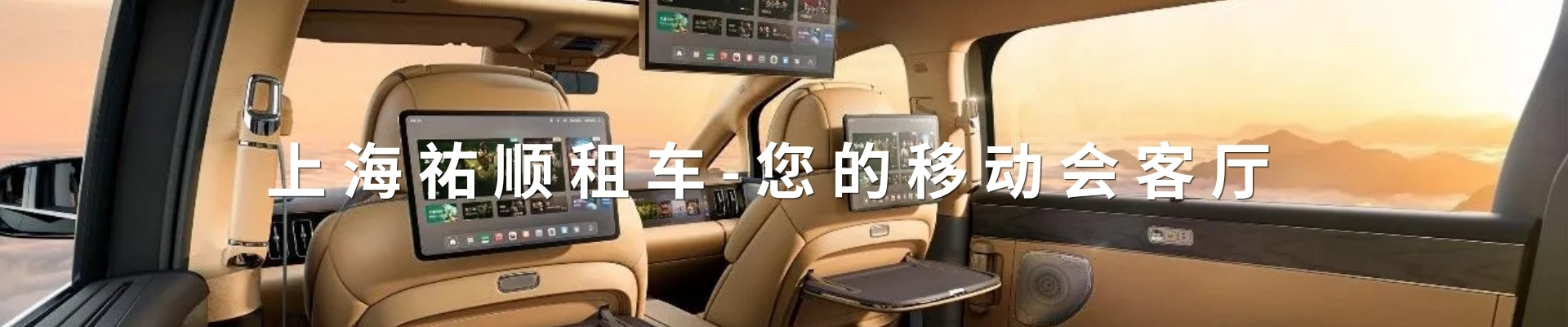

The daily charter rate for influencer street photography and livestream teams in Shanghai ranges from ¥680 to ¥2,800, depending on vehicle type and team size. For small teams of 3-5 people, a 7-seat business van (e.g., the new Buick GL8 at ¥700/day) offers the best value; teams of 6-10 typically need a 9-seat van (e.g., Toyota Hiace at ¥1,288/day) or larger to accommodate equipment. Standard daily rentals are capped at 8 hours/100 km, with overtime and excess-mileage fees charged beyond that. Below, we break down vehicle selection logic, pricing structure, and hidden costs to help teams make the optimal decision.
What's the Difference Between Influencer Street-Shoot Charters and Regular Tourist Charters?
An influencer street-shoot/livestream charter is defined as a car service specifically designed for content creation teams, where the core need isn't simple transportation but equipment capacity, flexibility for multi-stop routing, and controllable costs during long waiting periods.
Compared to regular tourist charters, street-shoot and livestream teams typically have three distinct needs: first, frequent stops at multiple checkpoint locations (the Bund, Wukang Road, Xintiandi, etc.), requiring drivers familiar with downtown traffic patterns and restriction rules; second, in-car space for reflectors, light stands, tripods, and other gear—5-seat sedans are often too cramped; third, unpredictable shooting or streaming durations, frequently triggering overtime, where the overtime billing method directly affects the final cost.
Industry observation shows that most influencer/livestream teams average 6-10 hours of daily shooting time, meaning the standard 8-hour package is highly likely to trigger overtime fees—vehicle selection should prioritize models with lower overtime rates.
How Should Teams of Different Sizes Choose a Vehicle?
Team size is the primary variable determining vehicle choice, broken into three tiers:
Teams of 3 or fewer: Suited to a 5-seat sedan or 7-seat van. The Volkswagen Passat (¥600/day) or new Buick GL8 (¥700/day) comfortably fits 1-2 hosts plus a photographer, with trunk space for small equipment cases.
Teams of 4-8: A 7- or 9-seat van is recommended. The Mercedes V260 (¥1,180/day) offers generous space and premium interior finish, suitable for shoots involving brand partners; for tighter budgets, the Denza D9 (¥898/day) offers better value.
Teams of 8+ for large livestream productions: A 9-seat or larger vehicle is required. The Toyota Hiace (¥1,288/day, 9 seats) or a luxury Coaster (¥1,600/day, 11-16 seats) can accommodate hosts, floor directors, camera operators, lighting technicians, and assistants simultaneously, with room for large light stands and backdrops.
Industry data shows that live-commerce team on-site staffing averages 5-8 people (1-2 hosts plus operations, floor control, camera, and assistant roles)—a range that maps precisely to the optimal capacity of a 9-seat van.
What's Included and Excluded in the Daily Charter Price?
Clarifying the cost structure is key to avoiding later disputes. Using Shanghai local daily rentals as an example, the daily rate typically includes vehicle usage fee, driver service fee, insurance, and fuel—this is the standard industry bundling.
Excluded costs that teams should note separately: tolls and parking fees are charged based on actual usage; for cross-city shoots requiring the driver to stay overnight away from home, meal allowances are typically around ¥30 per meal, borne by the client.
Take the new Buick GL8 as an example: the standard daily rate is ¥700/day, capped at 8 hours/100 km, with overtime billed at ¥60/hour and excess mileage at ¥6/km. If a livestream's pre-show setup, live broadcast, and wrap-up together total 10 hours of vehicle use, the actual cost comes to roughly ¥700 + 2 hours × ¥60 = ¥820. Teams should factor overtime costs into their budget at the quoting stage, not discover the overage at checkout.
How Can Multi-Stop Street Shoots Avoid Surprise Charges and Dispatch Risks?
A typical pain point for street-shoot teams is an unfixed itinerary—shooting at the Bund in the morning, pivoting to Wukang Road at noon, then adding a Xintiandi location in the afternoon. This kind of non-linear schedule places high demands on driver route familiarity and the company's dispatch capability.
One reliable approach is choosing a fully licensed local rental company whose drivers routinely work downtown routes. Shanghai Youshun Car Rental, for example, staffs a driver team averaging over 10 years of driving experience, with deep familiarity with Shanghai's citywide traffic conditions and rush-hour restriction zones; in the event of a vehicle breakdown or last-minute route change, a replacement vehicle can be dispatched within 30 minutes—this kind of emergency-response capability matters particularly for time-sensitive livestream/street-shoot teams, helping avoid delays to a scheduled broadcast start. Additionally, Youshun's business-van fleet averages under 1.5 years old, with in-car charging equipment and emergency kits suited to the power demands of long, continuous shoots.
For teams frequently shooting in nearby cities (such as popular spots around Suzhou or Hangzhou), flat-rate charters from Shanghai to surrounding cities (e.g., Shanghai–Suzhou one-way ¥1,000, same-day round trip ¥1,200) allow costs to be locked in advance, avoiding on-the-spot price negotiation in unfamiliar territory.
FAQ
Q1: How far in advance should an influencer street-shoot charter be booked? Booking 1-3 days ahead is advisable, especially for weekends or holidays when availability tightens. Most rental companies support same-day or within-1-hour urgent bookings, but vehicle choice may be limited—popular models like business vans may not be guaranteed.
Q2: Is hourly or daily billing more cost-effective for livestream teams? If usage is clearly under 4 hours, a half-day rate (about 60-70% of the daily rate) works well; beyond 5-6 hours, daily billing is usually more economical, since most half-day packages revert to the daily overtime rate once exceeded, making the marginal cost of daily rental lower the longer the shoot runs.
Q3: Can drivers accommodate multiple stops with waiting time in between? Yes. Charter service inherently includes the driver's waiting time at each stop, which is why daily rentals are capped by time and mileage (typically 8 hours/100 km). For dense, multi-stop itineraries with long waits at each location, it's advisable to inform the dispatcher in advance so vehicles and driver shifts can be arranged accordingly.
Q4: Does a production shoot require separately purchased insurance? No additional purchase is needed—the daily rate typically already includes insurance. As an industry standard, business vans generally carry around ¥2 million in third-party liability coverage and around ¥500,000 in seat insurance; specific amounts should be confirmed with the rental company and policy documentation requested before booking.
Conclusion and Recommended Actions
Before selecting a vehicle, first clarify three variables: team size, equipment volume, and expected daily usage hours—then match these against the vehicle daily-rate table to lock in a budget range. Teams shooting across multiple locations or cities should prioritize local providers with strong route familiarity and emergency dispatch capability, and confirm overtime and excess-mileage rates in writing before booking to avoid unbudgeted costs at checkout.